Bob Boyte Honda Moss Point - Which midsize truck rides smoother around Biloxi, MS — the Ridgeline or the Ranger?
If you’re weighing ride comfort, cabin quiet, and daily drivability along I-10 and the coastal causeways, one question rises to the top: which midsize truck rides smoother around Biloxi, MS — the Ridgeline or the Ranger? Both trucks deliver capability, but their underlying design choices lead to very different on-road manners. The Ridgeline’s unibody construction paired with a fully independent suspension yields a more composed, almost SUV-like feel over patchwork pavement and expansion joints. The Ranger’s traditional body-on-frame design with a solid rear axle is tough, but it can transmit more shake and shudder when the bed is empty and the road gets bumpy.
Let’s break down what you’ll notice in everyday driving. The Ridgeline’s rigid structure resists flex, so steering inputs feel precise and calm, especially when crosswinds pick up on the bridges or when traffic bunches up near the exits. Independent rear suspension helps the rear wheels track the road surface more faithfully, limiting head toss and that “hop” sensation over sharp bumps. Ranger offers impressive off-road packages, a strong lineup of EcoBoost® engines, and available dampers tuned for tougher terrain, but the same robust frame that excels in heavy-duty hauling can deliver a stiffer, busier ride during normal commuting.
Ride and chassis differences you’ll feel
On the Ridgeline, standard i-VTM4® AWD quietly distributes power for stability mid-corner and extra traction on slick surfaces. Intelligent Traction Management modes let you tailor response for Snow, Sand, or Mud, which helps when wet shoulders or sandy cut-throughs complicate your drive to the launch or a weekend project. Ranger’s selectable drive modes are available as well, and they add versatility, but the Ridgeline’s base setup feels more settled without the need to chase settings just to smooth out a commute.
Brake feel and body control are two other places you’ll sense the difference. Ridgeline’s suspension tuning keeps the truck planted under light-to-moderate braking in traffic, so pitch and dive are well managed. That contributes to confidence when you’re merging or adjusting speed quickly. Ranger’s 10-speed automatic can be quick and capable; however, the combination of frame, axle, and empty-bed dynamics may result in more secondary motion after sharp inputs, especially on uneven surfaces.
Cabin comfort and quiet
Noise isolation is where the Ridgeline’s structure pays dividends. The cabin stays impressively quiet at typical highway speeds, helping conversations and calls stay clear. Inside, the 9-inch Display Audio touch-screen with wireless Apple CarPlay® and Android Auto™ streamlines your day, while available tri-zone climate control and heated front seats keep everyone comfortable. Ranger counters with an available 12-inch center display and technology like a 360-degree camera on higher trims. For everyday ease, though, the Ridgeline’s cable-free setup and ergonomics feel intuitive right away.
Rear-seat flexibility matters, too. Ridgeline’s 60/40 split lift-up rear seat creates tall, secure cargo space, perfect for coolers, tool totes, and upright storage that won’t slide around. Ranger’s fold-flat rear seating and under-seat storage are useful, but the lift-up design in the Ridgeline makes full-width floor space easier to exploit when you’ve got a mix of passengers and bulky gear to manage.
Bed utility that simplifies daily life
Ridgeline’s UV-stabilized, composite bed resists dings and scratches and includes thoughtful touches that add up. The Dual-Action Tailgate opens down or to the side, giving direct access to the lockable In-Bed Trunk® with a built-in drain plug—ideal for wet gear, tools, or ice. An available 150-watt/400-watt in-bed outlet lets you power light tools or tailgate essentials. Ranger offers Pro Power Onboard™ 400W and an integrated box side step, both handy features. Still, the Ridgeline’s side-swing tailgate and secure trunk fundamentally change how you load, organize, and protect cargo without eating into bed space.
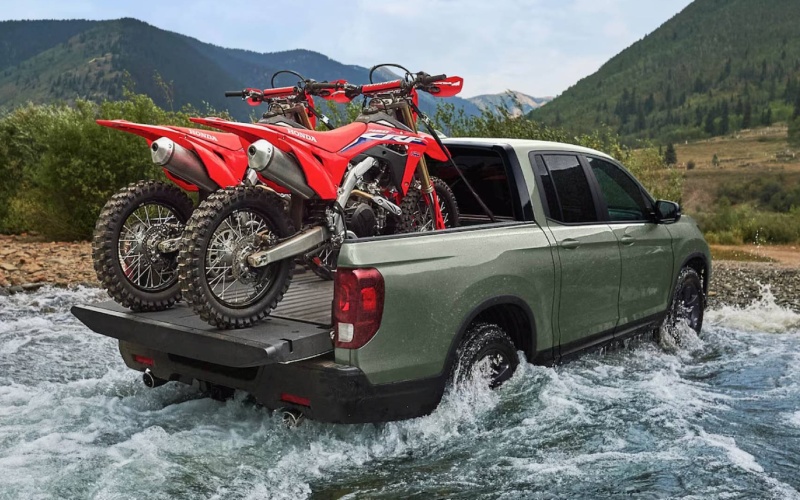
When it’s time to tow, Ridgeline’s integrated hitch and 7-pin connector are standard, with up to 5,000 pounds of towing capacity—ample for small boats, a compact camper, or a pair of ATVs. Ranger’s max available towing can exceed that figure depending on configuration. If you’re regularly pulling heavier loads, it’s worth considering. But for a lot of Gulf Coast drivers, the Ridgeline’s stable towing manners and serene ride quality are the bigger win day to day.
Safety and everyday confidence
Ridgeline includes the Honda Sensing® suite on every trim, with features like Collision Mitigation Braking System™ (CMBS™), Road Departure Mitigation (RDM), Lane Keeping Assist System (LKAS), and Adaptive Cruise Control (ACC). The available Blind Spot Information System (BSI) with Cross Traffic Monitor helps with lane changes and busy parking lots. Ranger brings Ford Co-Pilot360® technology, including BLIS® with Cross-Traffic Alert and Trailer Coverage on higher trims, plus an available 360-degree camera. Both trucks have strong toolkits, but Ridgeline makes confidence standard, not just optional.
Test-drive tips around the Coast
- Bridge seams and joints: Drive over a few back-to-back seams at 55–65 mph and note head toss, cabin shake, and steering settle time.
- Empty-bed ride: Take a loop with no cargo, then with a few hundred pounds in back, and compare how each suspension responds.
- Corner stability: On a safe, sweeping on-ramp, feel how each truck tracks, then how it settles after small steering corrections.
- Cabin noise: Make a hands-free call at highway speed and compare voice clarity and background sound on both ends.
- Bed access and storage: Load and unload a cooler and tool bag, trying tailgate positions and secure storage options.
The bottom line: if a calm, controlled ride is your top priority, the Ridgeline sets the benchmark in this class. That doesn’t diminish the Ranger’s strengths—especially for shoppers prioritizing higher max tow numbers or specialized off-road variants—but everyday comfort tilts the scales.
Frequently Asked Questions:
Does the Ridgeline’s unibody construction hurt durability compared to the Ranger’s frame?
No. Ridgeline’s body uses high-strength and ultra-high-strength steel extensively for rigidity and durability. The benefit is better ride isolation and handling without compromising everyday utility.
Which truck is more stable on wet roads and sandy cut-throughs?
Ridgeline’s standard i-VTM4® AWD and Intelligent Traction Management help you stay surefooted in changing conditions. Ranger offers drive modes and 4x4 systems on specific trims, but all-wheel drive is not standard across the lineup.
What’s the real-world difference in bed usability?
Ridgeline’s Dual-Action Tailgate and lockable In-Bed Trunk® change how you load and secure gear—especially helpful for valuables or wet items. Ranger’s Pro Power Onboard™ and box side step are helpful; the side-swing tailgate and built-in trunk are unique advantages for the Honda.
Ready to feel the difference in person? Bob Boyte Honda Moss Point can help you set up a back-to-back drive on the same route, serving Biloxi, Gulfport, and Mobile with local insights and guidance tailored to how you drive every day.